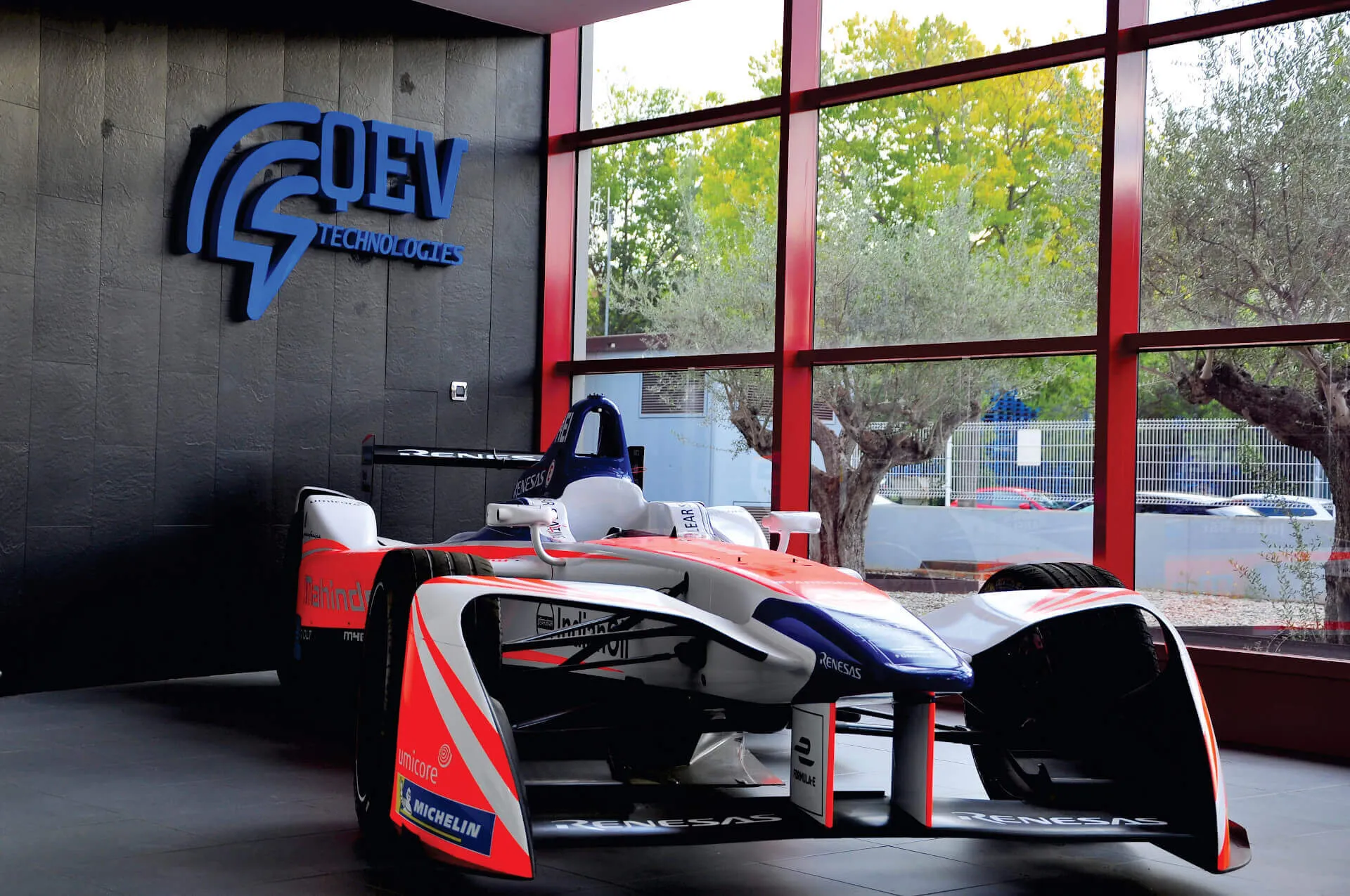
QEV Technologies (QEV Tech) is on a mission to transform the world for the better through the power of electric mobility. The full electric vehicle developer has its roots in racing and knows what it takes to create a winning supercar. It managed the NextEV-NIO team to victory in the inaugural 2014/15 Formula E championship, and in 2021 it plans to run a team in the brand new Extreme E championship. Off the race track, the company is busy sharing its expertise with the wider mobility industry and helping global automotive original equipment manufacturers (OEMs) accelerate their transition to electric technology.
Headquartered in Barcelona, Spain, QEV Tech’s vision also is linked closely to its local community’s needs. It sees a future where its home city’s inhabitants get around using electric vehicles, a city that bets on sustainable mobility and is united against climate change.
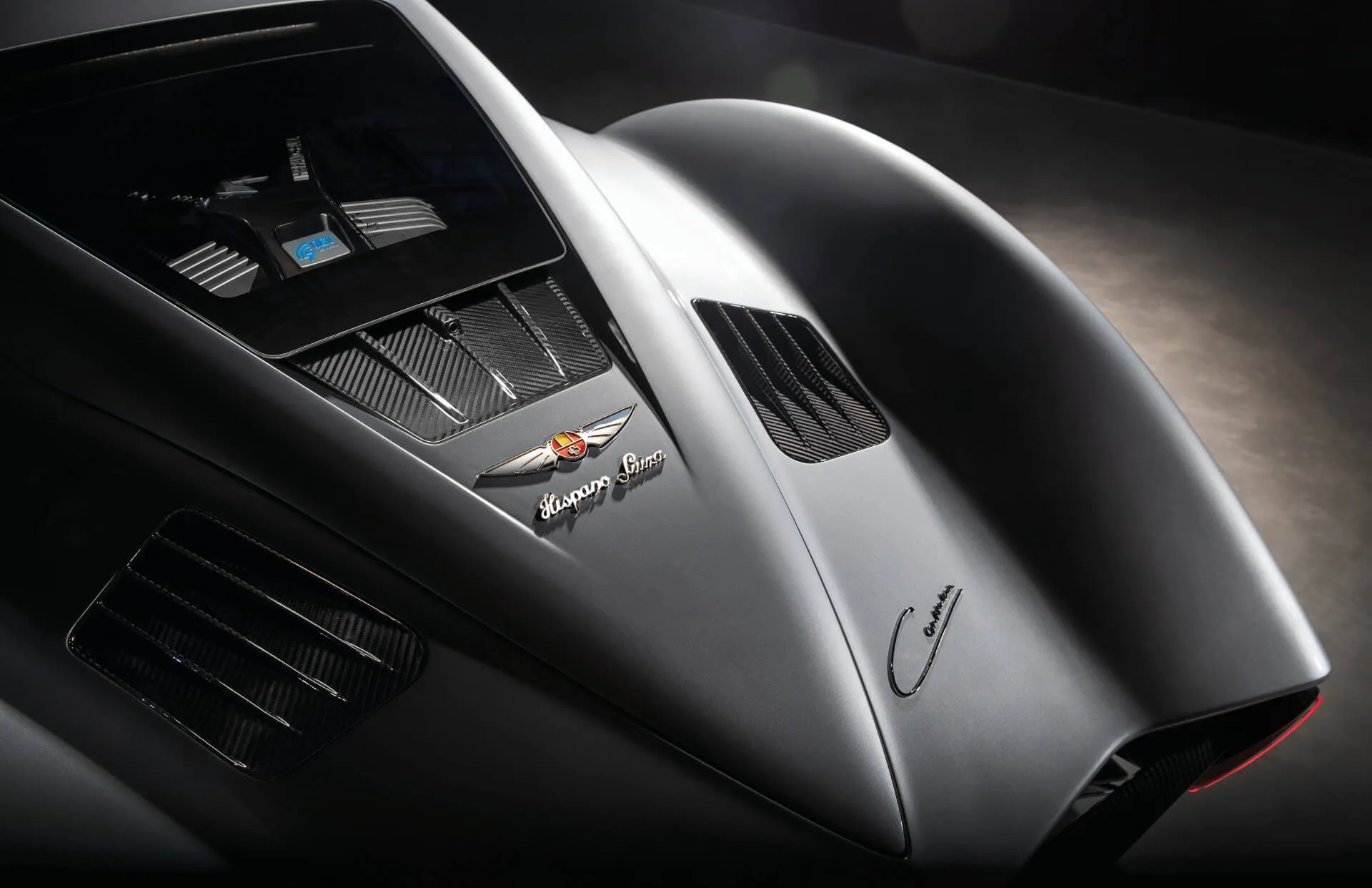
Through its three business lines – motorsport, electric hypercars and electric buses – QEV Tech partners with leading OEMs to help them develop electric powertrain technology and full e-vehicles, from design concept and prototyping to full production.
“The motorsport industry is where we started out,” said Joan Orús, COO of QEV Tech. “It’s where we have our know-how and it’s a great marketing platform for us to branch out and share our expertise more widely. Then we have our second line – electric hypercars – offering our services to different manufacturers and working with them to build prototypes from scratch. And our third line is the electric bus, where we sell our e-kit platform to manufacturers, or work with them to develop a complete e-bus. We want to apply this technology to change the world. We want to have clean cities. For us, it’s not just about developing the fastest, most expensive cars; we need to focus on lowering costs and bringing greater efficiencies to the wider mobility industry, and we can use our expertise to do that.”
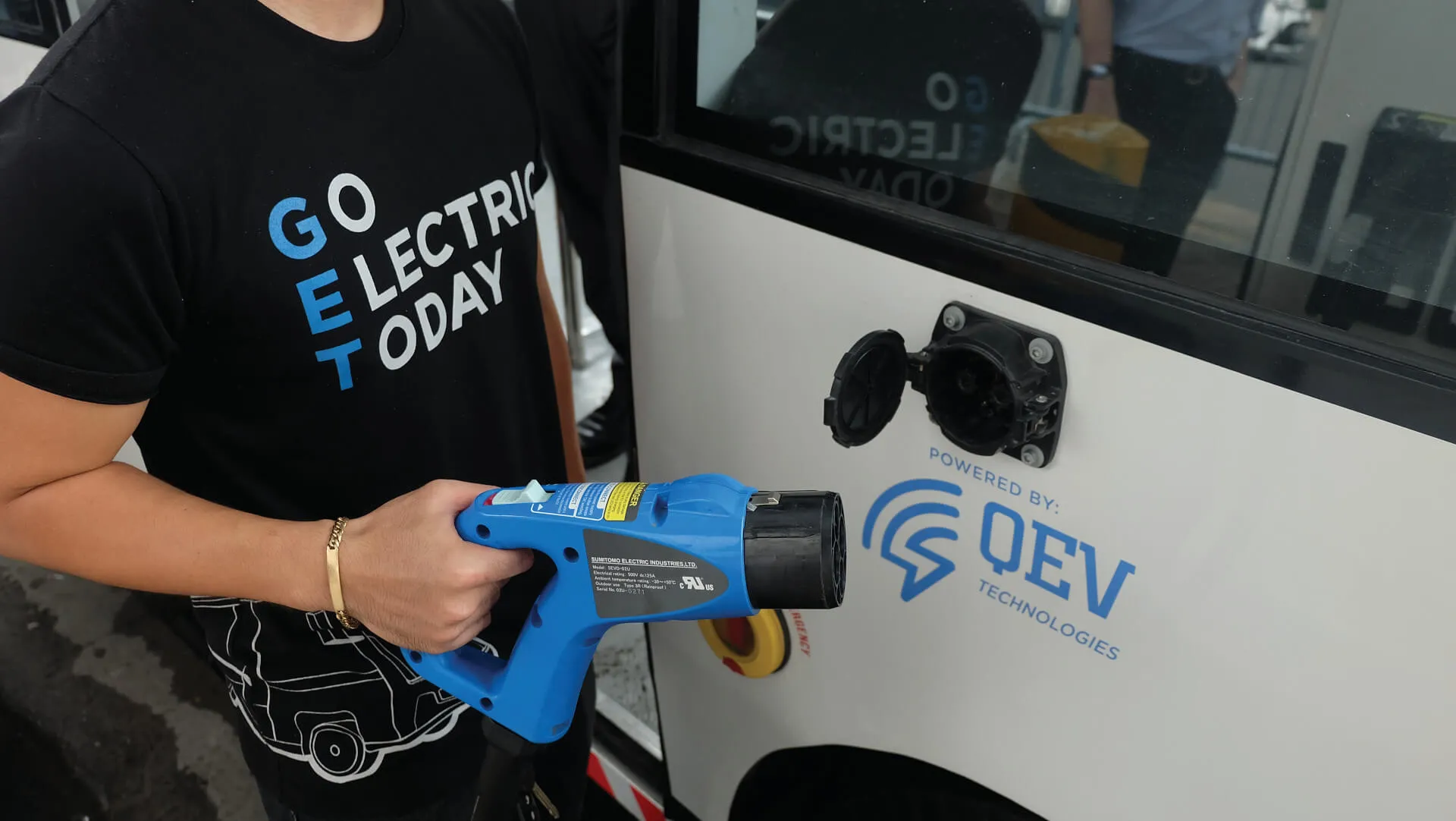
In the Philippines, for example, QEV Tech is tackling high pollution levels by working with local manufacturers to convert thousands of minibuses, called jeepneys, into e-buses using its Astrokit, which includes the motor, inverter, gearbox, cooling, charging, battery pack and all electronics needed to transform a combustion-engine vehicle into a fully-electric vehicle.
“There are a lot of smaller manufacturers out there producing the external shell of a bus, but they don’t always have the ability to move to electric,” Orús said. “It’s hard for them to develop this technology from scratch. So we sell them the platform or work with them to build a full e-bus.”