
Shift From Global To Local
Manufacturers are increasingly reconsidering their offshoring approaches – what is driving the localization trend and is it the right choice?
Trend
Faced with a dwindling pool of prospective employees, manufacturers need to consider how digital can augment their talent retention.
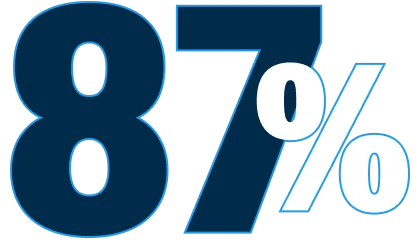
We’re in the middle of a global talent shortage. According to data from consultancy McKinsey, a massive 87% of businesses report that they are either facing a skills shortage or expect to do so in the next five years.
Manufacturing industries in particular are struggling to make themselves seem attractive to the next generation compared to high-paying, glamorous roles in technology. For many mature economies, such as Japan and Germany, aging populations are making the situation ever more pressing. Factors too like the COVID-19 pandemic and the great resignation play a significant role.
It all adds up to a potential crisis for manufacturers. “Around 85 million jobs could go unfilled because of continuous trends of demography, a lack of attractiveness and the skills gap,” says Valerie Ferret, Vice President of 3DEXPERIENCE® EDU at Dassault Systèmes.
Respond to today's challenges with our bespoke solutions

As a matter of simple arithmetic, the consequences of the skills gap are clear. The fewer manufacturing workers that come into industries, the less productive those industries will be. Deloitte estimates that the skills gap could cost the United States alone US$2.5 trillion over the next decade.
And the global skills gap isn’t just about struggling to attract new talent. When employees move on, businesses don’t just lose a pair of hands. They lose a lifetime of experience, manufacturing skills, and operational knowledge.
“Without the right people who are empowered with the right knowledge and know-how, and equipped with the necessary factory worker skills, you have productivity issues, and you have quality issues,” says Ferret. “Manufacturers obviously know this well. The next step is figuring out what to do about this skills crisis.”
To address the skills shortage, manufacturing companies must focus on three key areas:
1. Talent attraction: Competing harder for new workers
2. Talent retention: Keeping and developing manufacturing employees
3. Knowledge & know-how preservation: Finding ways to retain knowledge as skilled workers move on
Technology is one answer. Empowering manufacturers to capitalize and store knowledge and know-how, creating the kind of tech-enabled roles that are attractive to contemporary workforces. However, it must be used to enhance rather than simply replace.
“The company who will be the most competitive in the future is not the one that will automate the most of their processes and activitues, but the one that will empower their workforce with knowledge and know-how,” says Ferret.
An example of this in action is Australian carbon fiber component manufacturer Quickstep. Despite the cutting-edge focus of their business, most of their engineering activities and workflows were either paper-based or database documents that needed to be constantly updated. By employing a platform-based approach, Quickstep was able to improve knowledge management across the business by making it both accessible and contextual.
“The platform is helping us document better what we do and give access to all our employees on lessons learned and knowledge generated,” says Kieren Dale, Production Engineering Lead, Quickstep. “It means they can work in a more informed way.”
As Ferret points out: The technology platforms that drive value will be ones that allow for more collaboration and more decision-making power for people. This is key to retaining, developing and attracting talent.
Technology platforms allow more collaboration and more decision-making power, and this is key to retaining, developing and empowering talent.
Manufacturers are increasingly reconsidering their offshoring approaches – what is driving the localization trend and is it the right choice?
Trend
The pressures of digitalization and the global pandemic have transformed the global consumer at all scales, and businesses are learning how to adapt.
Trend
As the digital revolution continues, manufacturers are finding themselves driven to pursue new, revolutionary business models.
Trend
Supply chains around the world are under unprecedented pressure, and building resilient, flexible, and transparent supply chains is of critical importance.
Trend
Today’s factories are undergoing a profound transformation, and new technologies and solutions mean new ways of making things.
Trend
To tackle the global challenges of climate change, finite resources, and pollution, manufacturing industries must reassess the current linear system of production and consumption and focus on business models where resources are kept in use and waste is minimized.
Trend
Bridge the gap between the virtual and real world to accelerate from concept to operations.
Discover how the 3DEXPERIENCE® platform drives innovation in the industry with CPG solutions for design, simulation and AI-driven forecasting.
Virtual Twin Experiences for Sustainable Innovation – Helping Manufacturers Improve Consumer Products
Simplify and accelerate innovation to create more valuable consumer experiences.
Digitalize manufacturing to deliver made-to-order innovation.
Accelerate the sustainable transformation of the Marine & Offshore industry.
Driving vehicle innovation toward the mobility of the future