Classic MBSE often focuses on the use of SysML where requirements are captured as plain text. Therefore they are not part of the verification nor of the simulation. As they are in plain text, nothing can be generated out of them so each and every test case must be created manually from each and every functional requirement.
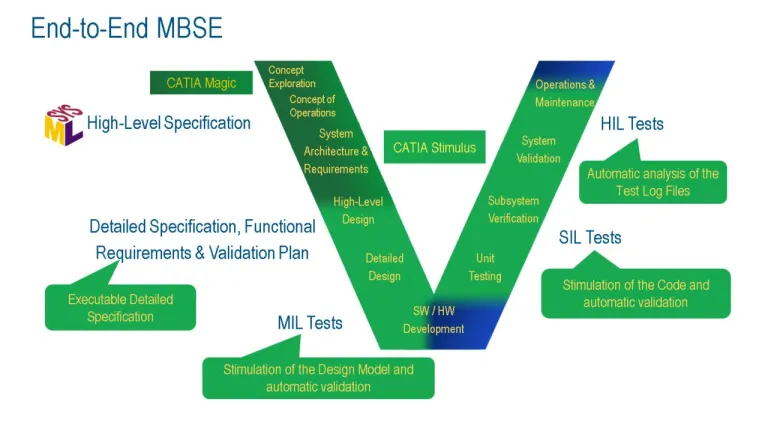
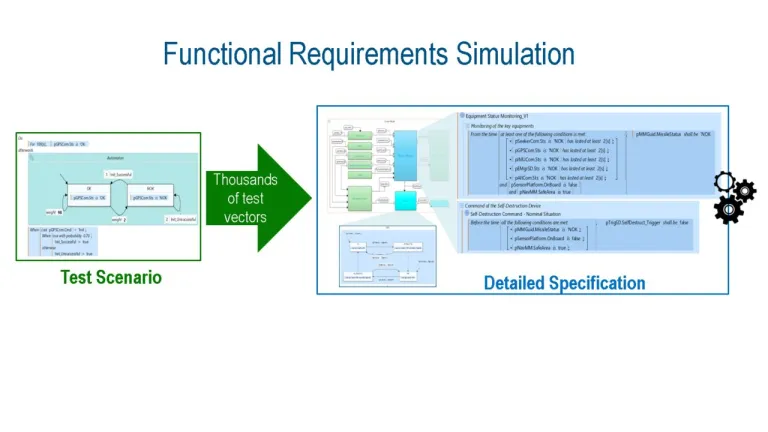
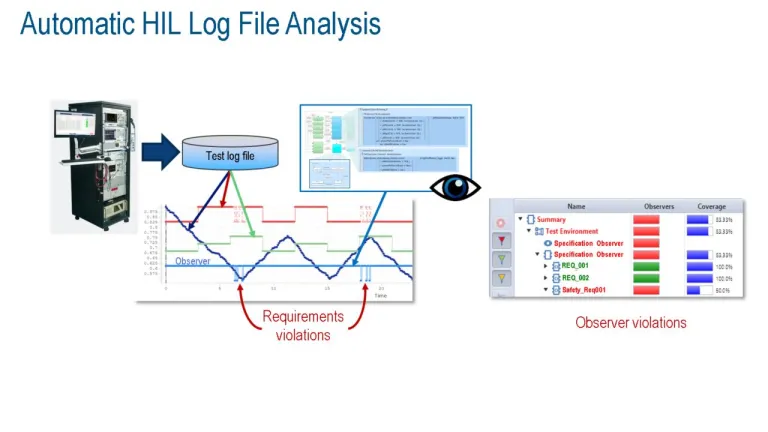
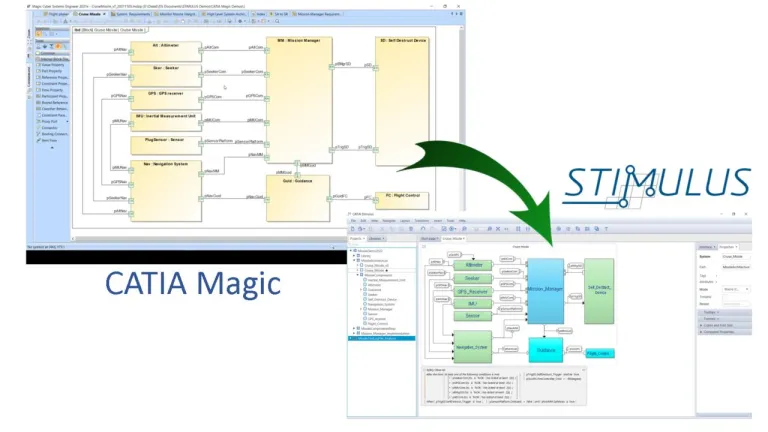
STIMULUS brings a new paradigm as it extends the modeling capabilities to also include the functional requirements. 100% of the system behavior can be captured which also means that new test automation possibilities appear: test scenarios can be captured and the STIMULUS constraints solver will use them to generate as many combinations of input as you like. These test vectors are used to stimulate the specification, but also to stimulate the code later on. STIMULUS will observe the code response and will compare with the behavior defined in the requirements, making the functional test completely automatic. At integration time, Stimulus will analyze the log file generated by the HIL test environment and will compare the integrated system behavior to the requirements enabling tester to detect automatically any violation of any requirement.