




Maxxis International by Cheng Shin Tire
Cheng Shin Tire uses MODSIM to innovate tire designs, materials, and compounds for next-gen mobility, driving competitive edge for its global Maxxis brand.
Customer Story
Ensure stakeholder alignment by capturing, analyzing and tracking project needs throughout the development lifecycle
Requirements management is the process of systematically capturing, analyzing, documenting and tracking project needs to ensure they align with expectations and are effectively implemented throughout the product development lifecycle. It helps prevent scope creep, miscommunication and missed objectives by maintaining clear and organized requirements. This process is essential for delivering successful projects that meet both business goals and user needs.
Requirements management ensures traceability throughout the product development lifecycle by tracking changes, assessing their impact and ensuring all requirements are met as the project evolves. This fosters transparency and adaptability, enabling teams to respond effectively to shifting priorities or unforeseen challenges. Beyond just tracking, it promotes collaboration between stakeholders, project managers and development teams, creating a shared understanding of project goals. By validating and prioritizing requirements, organizations can focus on delivering critical features while reducing risks. A systematic approach enhances communication, improves efficiency and ensures high-quality deliverables that meet both user needs and business objectives.
The 3DEXPERIENCE platform integrates requirements management directly into the product development process. This ensures that all stakeholders—from design to engineering—have real-time access to a single source of truth for project data. By connecting requirements with design, simulation and validation processes, the 3DEXPERIENCE platform enables teams to collaborate more effectively, reduce errors and ensure products meet both regulatory standards and customer expectations. This holistic approach enhances traceability, fosters innovation and accelerates time-to-market.
Accurately gathering and documenting stakeholder needs to create a clear foundation for the project.
Ensuring requirements are feasible, aligned with business goals and meet stakeholder expectations.
Tracking requirements throughout the project lifecycle to assess changes and ensure alignment with objectives.
Promoting effective communication among stakeholders and teams to maintain a shared understanding of project goals.
Requirements management solutions play a crucial role in driving sustainable and eco-friendly product development. By incorporating sustainability requirements early in the development process, organizations ensure environmental considerations are integrated throughout all stages of product design. Requirements management tools help track and trace sustainability goals, ensuring that eco-friendly objectives are met.
In agile environments, requirements management supports iterative development by maintaining a backlog of prioritized requirements, enabling sprint planning, execution and continuous stakeholder feedback integration.
In industry sectors like aerospace and medical devices, requirements management tool ensures compliance by documenting and tracing requirements to regulatory mandates, providing a clear audit trail for approvals and regulatory changes.
In industrial equipment and automotive engineering, requirements management solution tracks interdependencies between subsystems, ensuring system integrity and compliance with industry standards and regulations.
In software development, requirements management translates user needs into development tasks, helping teams prioritize features, manage changes, and ensure traceability between requirements and code. This is essential in agile software development environments where requirements evolve rapidly.
Maintaining a history of changes to requirements, allowing teams to track and compare revisions, then revert to previous states if needed.
Providing dashboards, charts and reports to visualize requirements progress, dependencies, and overall project status.
The ability to store and reuse previously defined requirements for similar projects, saving time and ensuring consistency.
Identifying and analyzing the ripple effects of changes to requirements on timelines, budgets, and project deliverables.
Tools to gather, manage and incorporate feedback from stakeholders directly into the requirements process.
The Requirements Engineer role from ENOVIA minimizes product failures by adopting a requirements-driven development approach. It refines global requirements management by capturing the "voice of the customer" and converting it into detailed specifications that guide product development. With a centralized repository, it ensures efficient management of customer needs, product requirements and configurations, seamlessly connecting design, development and launch.
Requirements Engineer helps companies comply with industry standards and reduce development costs by aligning product requirements with the design-to-launch workflow. It enhances team communication and collaboration through a shared platform while strengthening quality and traceability throughout the requirements lifecycle. By capturing customer insights and maintaining a centralized repository, it simplifies change management, improves impact analysis and ensures effective implementation tracking, driving innovation and market success.
ENOVIA's requirement management solutions have been successfully implemented across various industries, delivering tangible benefits to customers.
Clarion Malaysia isn’t just keeping up with the latest technology; it’s thinking ahead. Today, the company manages product changes with ENOVIA, ensuring production data is synchronized with the latest design updates. With multiple engineers working on each project, ENOVIA’s governance tools make sure that all team members work with the most current version of a part, reducing costly rework.
With enough data, I will know where my bottleneck is, where the integration of automation is going to start, and how to plan the whole process. We will be working with Dassault Systèmes to leverage model-based systems engineering (MBSE), AI and virtual twin technology to its fullest potential.
Cheng Shin Tire uses MODSIM to innovate tire designs, materials, and compounds for next-gen mobility, driving competitive edge for its global Maxxis brand.
Customer Story
iHawk Global redefines container yard visibility with autonomous drones and ground robots which are designed using a simulation-first approach on the 3DEXPERIENCE platform.
Customer Story
Blue Spirit Aero uses the 3DEXPERIENCE platform to develop Dragonfly, a hydrogen-powered aircraft, with Virtual Twins for design, simulation, and certification.
Customer Story
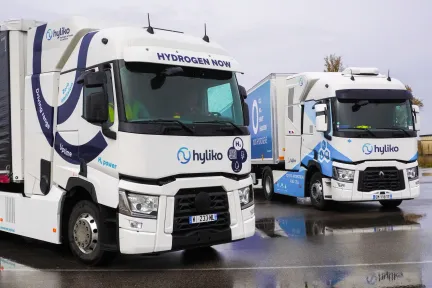
Discover how Hyliko uses the 3DEXPERIENCE platform to design, simulate and scale hydrogen trucks for zero-emission long-haul freight.
Customer Story
The integration of requirements management with virtual twin technology is revolutionizing digital product development. Virtual twins, which are digital representations of physical products, allow teams to simulate and test products in virtual environments. By linking requirements directly to these virtual models, developers can seamlessly validate design decisions against specified requirements. It also facilitates better collaboration between design, engineering and testing teams, as all stakeholders can visualize and interact with the product's virtual representation while tracking requirement fulfillment.
Explore the content below to learn more about Requirements Management.
Watch this on-demand webinar and discover how the 3DEXPERIENCE platform brings teams across the value network together to collaborate on product innovation.
E-seminar
Watch this webinar to discover the Dassault Systèmes Life Cycle Assessment (LCA) solution.
E-seminar
Explore the essential role of the Requirements Engineer and learn how the 3DEXPERIENCE Platform can transform your global requirement management process
E-seminar
Enhance product innovation and accelerate market delivery through effective collaboration
Streamline data integration, enhance operational efficiency and ensure compliance across the organization
Navigate product quality and compliance confidently with essential insights to maintaining standards and fulfilling regulatory demands
Define clear objectives and prioritize actions to ensure sustainable growth and competitive advantage
Speak with an ENOVIA expert to learn how our solutions enable seamless collaboration and sustainable innovation at organizations of every size.
Courses and classes are available for students, academia, professionals and companies. Find the right ENOVIA training for you.
Find information on software & hardware certification, software downloads, user documentation, support contact and services offering.