

Enterprise Agility
Drive success through flexible, cross-functional collaboration that accelerates decision-making and delivers on customer-centric demands.
Challenge
Optimize the lifecycle management of industrial equipment to improve performance, reduce cost and maximize equipment lifespan.
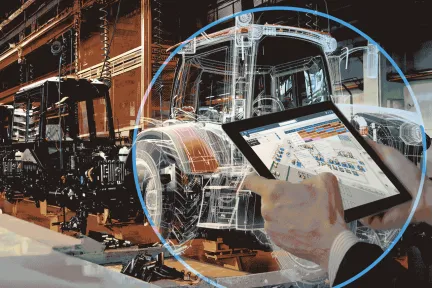
In today's industrial landscape, equipment lifecycle management goes far beyond maintenance. It underpins operational productivity and gives companies a competitive upper hand. From design to decommissioning, manufacturers rely on their equipment to perform reliably, efficiently and sustainably throughout its lifecycle. Any unplanned downtime or failure can impact throughput and business revenue.
Equipment lifecycle management is the end-to-end process of managing an asset — from concept and design, through usage and maintenance, to final disposal or repurposing. Each asset, regardless of size or complexity, represents a significant capital investment. This is why maximizing usage while minimizing downtime is the key to profitability and sustainability. Effective asset lifecycle management can help maximize a company's return on investment (ROI) in its most valuable assets.
According to Allied Market Research, the global industrial equipment market is expected to reach $3.8 trillion by 2030. As asset-intensive sectors – like energy, manufacturing, construction and mining – increase their capital expenditures, the need for strategic asset lifecycle management has become more urgent than ever.
Furthermore, statistics from the Aberdeen Group highlight that unplanned downtime costs industrial manufacturers up to $50 billion annually in lost productivity and repair. As such, organizations are shifting from reactive to proactive asset management strategies, investing in technologies such as the virtual twin solution, predictive maintenance and IoT-enabled monitoring.
Managing equipment across its full lifecycle involves strategic planning, seamless coordination and proactive decision-making at each stage. The four stages of the equipment lifecycle include planning, procurement, maintenance and disposal. From equipment design to decommissioning, manufacturers must address technical, operational and sustainability demands while reducing costs for long-term value.
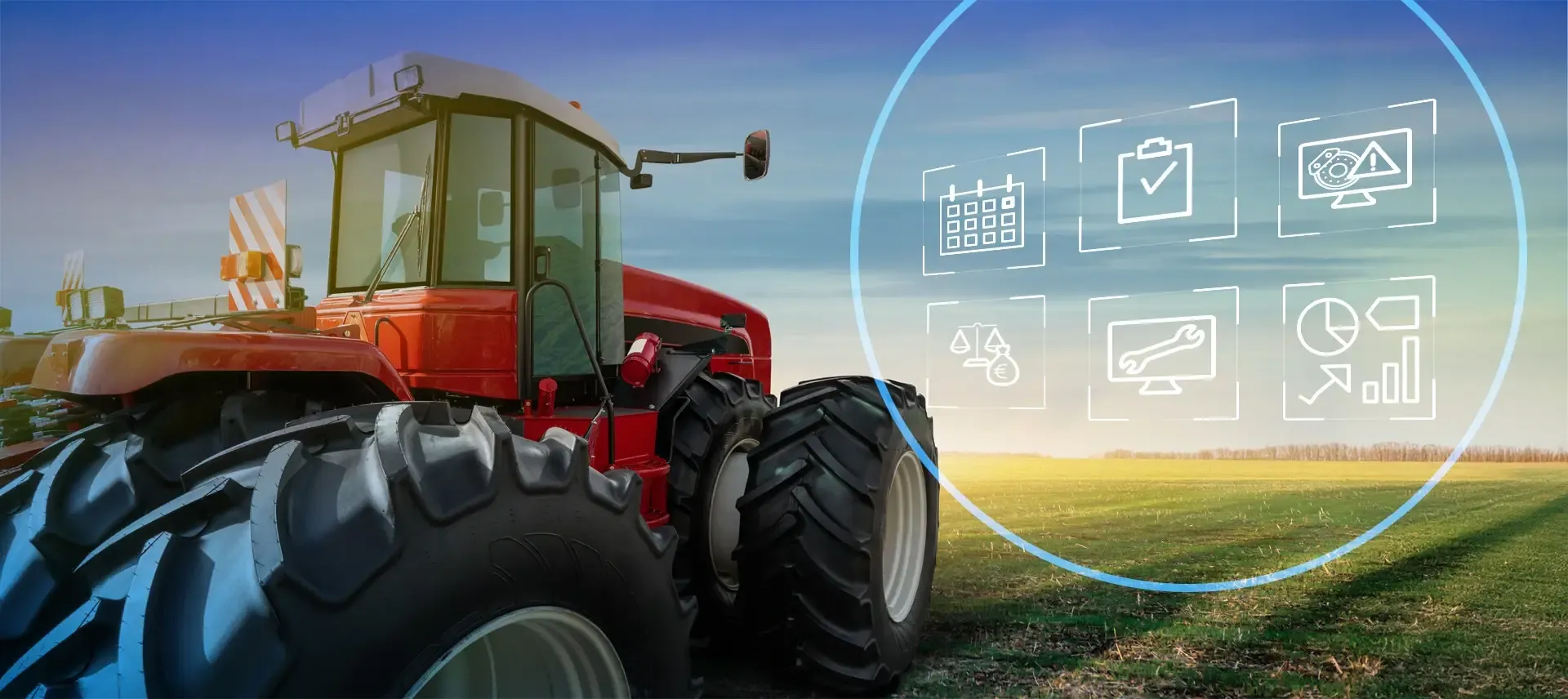
Here are the key challenges from four different aspects during the equipment lifecycle:
Dassault Systèmes’ virtual twin technology enables original equipment manufacturers (OEMs) and operators to optimize end-to-end equipment lifecycles effectively. It helps drive measurable improvements in performance, sustainability and profitability across every stage of the lifecycle, including:
By enabling predictive maintenance, the virtual twin reduces total cost of ownership by managing all replacement or maintenance costs effectively.
The virtual twin's simulation capabilities help with planning and tracking maintenance, upgrades and repairs throughout the assets' lifecycles.
With a proactive approach, the virtual twin allows better end-of-life planning for asset replacement or decommissioning while adhering to industry and environmental regulations.
Based on real-time insights, the virtual twin facilitates informed decision-making to further improve aftermarket services.
Effective equipment lifecycle management is essential for sustaining industrial performance and minimizing long-term operational costs. From initial design to final decommissioning, each phase presents unique challenges that require strategic decision-making supported by valuable data. By leveraging virtual twins, manufacturers can adopt a more proactive and integrated approach to managing assets efficiently, extending equipment lifespan and ensuring sustainability compliance. With this, industrial equipment companies can unlock greater value through higher ROI and build more resilient, future-ready operations.
Drive success through flexible, cross-functional collaboration that accelerates decision-making and delivers on customer-centric demands.
Challenge
Unify operations, boost visibility and drive efficiency with DELMIA — your key to operational excellence.
Article
Virtual twins and advanced analytics drive performance optimization, operational efficiency, and superior customer service.
Article
Leverage the 3DEXPERIENCE platform for greater field operations efficiency, after-sales services and success in the industrial equipment scene.
Article
Simplify the intricacies of the heavy mobile machinery supply chain through digitalization. Discover the value path for streamlined efficiency.
Article